
Unlock the White House Watch newsletter for free
Your guide to what Trump’s second term means for Washington, business and the world
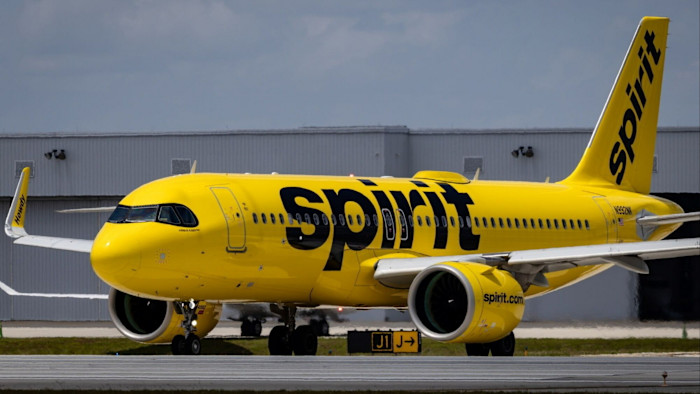
US budget carrier Spirit Airlines said on Saturday that it was shutting down operations after talks stalled among its creditors over a proposed $500mn bailout package from the Trump administration.
“It is with great disappointment that on May 2, 2026, Spirit Airlines started an orderly wind-down of our operations, effective immediately,” the company said in a statement published on its website.
“All flights have been cancelled and customer service is no longer available. We are proud of the impact of our ultra-low-cost model on the industry over the last 34 years,” it added.
Bondholders who had balked at allowing the proposed government loan to supersede their position in the Spirit debt stack ultimately could not come to a deal with the White House and the company’s advisers after negotiations over the past 10 days.
US President Donald Trump said on Friday his team was still “looking” at a rescue for the airline, but would only proceed “if it’s a good deal”.
The Trump administration confirmed last week that it was considering investing as much as $500mn in Spirit in an effort to fund the airline’s exit from bankruptcy. Such a deal would represent the latest example of the US government taking a large stake in a private enterprise.
But talks stalled as certain Spirit creditors declined to support the rescue package. The holders of the airline’s $3bn of debt would have to consent to any deal struck with the federal government or be repaid in full.
Holders of a $275mn senior revolving credit facility administered by Citigroup, as well as a separate committee of unsecured creditors that holds billions of dollars of junior claims, were willing to sign off on the proposed bailout, the FT reported this week.
But some of Spirit’s bondholders — the broader group includes Citadel Americas, Cyrus Capital, Ares, Pimco and Arena Capital — had come to prefer a liquidation of the company’s assets over a reorganisation. The dissenters cited millions of dollars in operating losses that had piled up earlier this year, even before the Iran war drove a surge in fuel prices.
The proposed bailout would have given the bondholders new debt in the reorganised Spirit as well as 10 per cent of its shares.
“The Trump administration made an extraordinary effort to try and save Spirit, but you can’t breathe life into a corpse,” a creditor close to the deal said.
The creditor said the bondholders had made a counterproposal to the original Trump terms. These made the bailout terms consistent with the rules of debt repayments in Chapter 11 bankruptcy, the creditor claimed, but the alternative plan received little response from Spirit and the White House.
On Friday a company spokesperson declined to respond to the bondholder position but said the bondholder group in March believed in the company’s long-term prospects to sign an agreement with the company to reorganise Spirit into a new company.
Asked about lenders’ concerns about being bumped down in priority, Trump told reporters on Friday, “We’re looking at Spirit and if we can help them we will but we have to come first. We’re first. It’s America first.”
Speaking from the White House lawn before departing for Florida, Trump said, “I’d like to save the jobs, but we’ll have an announcement some time today. We gave them a final proposal.”
The Wall Street Journal first reported on Friday that Spirit was preparing to cease operations.
United Airlines said on Friday it was “preparing to support Spirit customers and employees in the event of a shutdown” as larger US network carriers contemplated moves to secure assets, including Spirit’s valuable airport slots at hubs including Fort Lauderdale, Florida; Newark, New Jersey and New York’s LaGuardia.
Spirit’s management criticised United last year after the Chicago-based giant said it was adding routes in anticipation of the possibility of the low-cost carrier being liquidated.
“If Spirit suddenly goes out of business it will be incredibly disruptive, so we’re adding these flights to give their customers other options if they want or need them,” United said in a statement announcing the new routes in September.
That prompted Spirit to accuse United of “looking to eliminate a low-cost competitor so they can fulfil their ultimate goal of charging American travellers the highest fares possible to visit the people and places they love”.
Dallas-based network carrier American Airlines also said on Friday that it would help Spirit customers whose travel is disrupted and that it had implemented fare caps on main-cabin tickets for routes where the two airlines both operate.
