
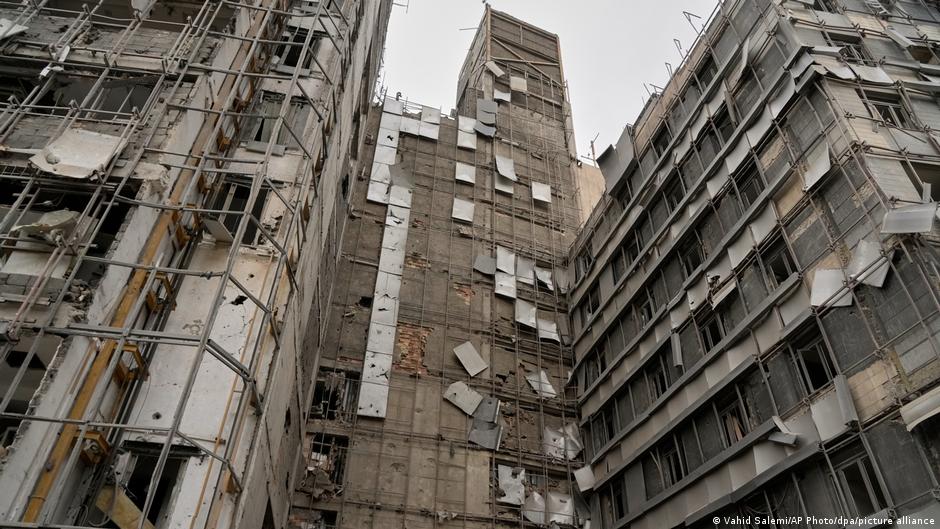
Behind the front lines of every war, those whose survival is dependent on regular medication and vital treatments are often overlooked. The cancer patient Fatemeh S. has been increasingly worried about her future since the start of the war in Iran two weeks ago.
“I urgently need surgery,” she told DW.
While it is hard to obtain accurate numbers of Iranians who need uninterrupted chemotherapy, suffer from multiple sclerosis, have blood disorders or diabetes, it is safe to say that their situation is further acerbated by the growing number of private clinics and medical centers that are shutting down.
Hospitals are understaffed, scheduled surgeries are being postponed and vital services such as vaccinations or the treatment of chronic diseases are being interrupted, two Austria-based Iranian doctors and human rights activists, Dr Hassan Naib Hashem and Dr Hamid Hematpour, confirm.
“Some specialists in Tehran currently care for 200 to 300 patients — that is many times the normally manageable capacity,” radiologist Hamid Hematpour told DW.
His colleagues in Iran also told him of power outages in hospitals following attacks. And since the beginning of the US-Israeli war in Iran on February 28, 2026, authorities in Iran have shut down most internet connections.
“When internet and phone connections are curbed, medical coordination becomes nearly impossible,” Hematpour said, adding that also telemedicine consultations have virtually come to a standstill.
Furthermore, many doctors fled to the north of the country, such as to Gilan or Masandaran on the Caspian Sea. In turn, many chronically ill patients lost contact with their doctors, and with this, access to urgently needed special medications.
Also, some medications must be stored at specific temperatures, and power outages can cause them to spoil.
Health system under threat
However, according to the Iranian Health Ministry, there are “sufficient strategic reserves.”
Only, the reality for many families paints a completely different picture: Disruptions in the drug distribution system as well as sanctions make it increasingly difficult to obtain life-saving medications.
“This is life-threatening for people with haemophilia or rare genetic disorders,” Iranian doctor Hematpour said. “Many of these medications are not freely available on the market anyway and if shortages persist for more than a few weeks, these groups face an irreversible health crisis,” he warns.
The Iranian doctors in Vienna also fear that a further escalation of the war could lead to the collapse of Iran’s entire healthcare system.
The rapidly rising number of war casualties could quickly overwhelm the healthcare system, Hematpour said.
“In some regions, including the western provinces of Ilam [some 515 kilometers (320 miles) southwest of the capital, Tehran,] and Kermanshah province [nearly 460 kilometers (230 miles) from Tehran], shortages have already occurred even for basic medicines and antibiotics,” he added.
“War shakes the foundation of all rights, namely the right to life,” Hassan Nayeb-Hashem told DW. “Once this fundamental right is threatened, further violations follow almost inevitably, such as the right to health and medical care.”
He further highlighted that in war, humanitarian damage goes far beyond the death toll.
“Experience from past conflicts shows that the number of injured is usually three to six times higher than the number of those killed,” he said.
According to the latest report by the World Health Organization, national health authorities in Iran reported more than 1,300 deaths and 9,000 injuries since the start of the war. As of now, WHO has also verified 18 attacks on health care facilities, resulting in eight deaths among health workers.
This article was originally published in Farsi.
